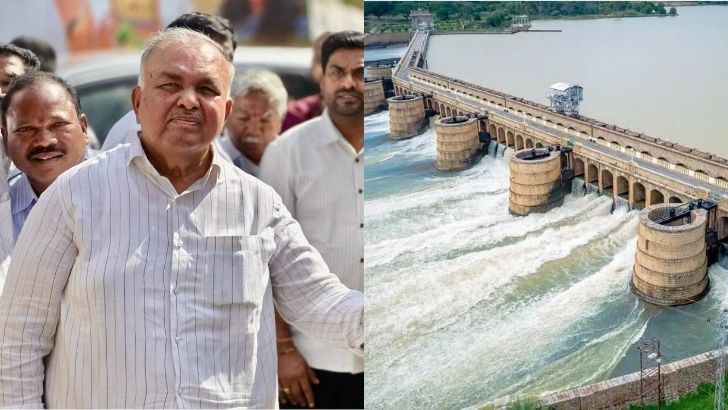
Karnataka bandh: Mandya sees protests as Bengaluru, Mysuru remain largely normal
Several Kannada organisations withdrew their support for the shutdown, leaving the bandh with a mixed response across Karnataka.
PTI
-
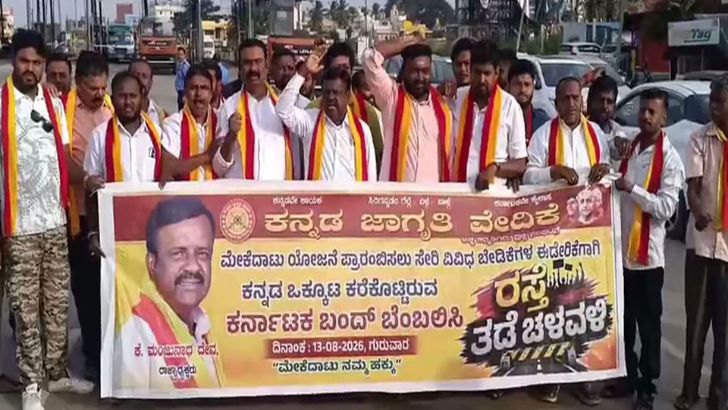
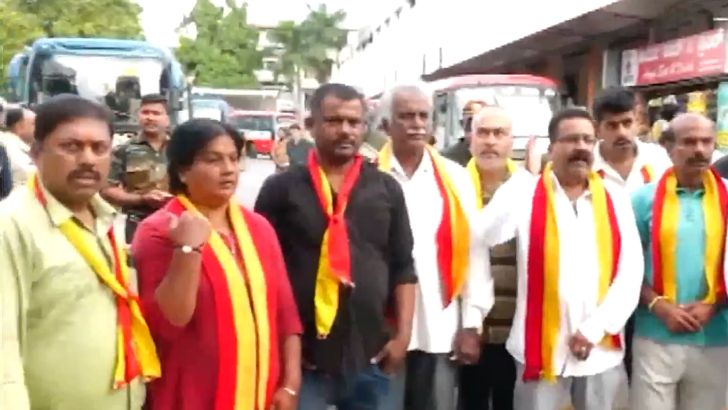
Pro-Kannada activists staged protests and blocked roads in Mandya, while transport and businesses largely operated normally elsewhere (Screengrab)
Bengaluru, 13 August
The Karnataka bandh called by pro-Kannada activist Vatal Nagaraj on Thursday against the Cauvery water release to Tamil Nadu evoked mixed response, with intense protests in Mandya and preventive detentions at several places, while life remained unaffected in major urban centers like Bengaluru and Mysuru as organisations that had backed the agitation initially, later withdrew support.
The bandh was called by the Federation of Kannada organisations led by activist Vatal Nagaraj, in protest against the directions of the Cauvery Water Regulation Committee (CWRC) and the Cauvery Water Management Authority (CWMA) to release 12,000 cusecs of water to Tamil Nadu.
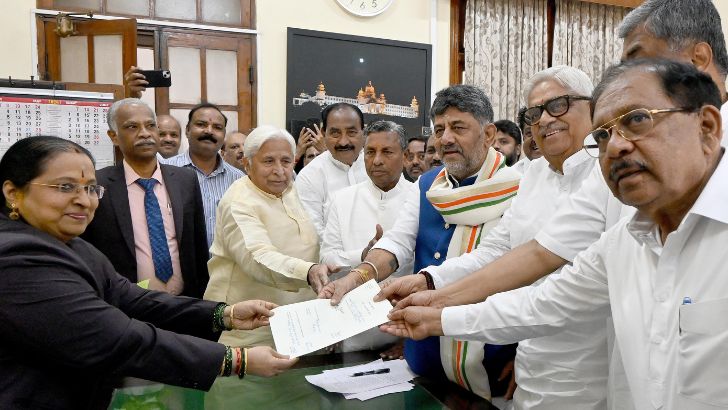
The call lost some momentum after several Kannada organisations withdrew their support. Chief Minister D K Shivakumar said that some activists, including Praveen Shetty and Sa Ra Govindu, had met him and informed him that they were withdrawing the bandh call.
"They have said that they are withdrawing the call, which is very happy news. I congratulate them and thank them for it," Shivakumar told reporters.
Nagaraj was taken into preventive custody from his residence in Bengaluru before he could join the planned protests. Police took Nagaraj into custody from his residence in Dollars Colony in the city after he refused to come out.
He had reportedly planned a rally from the BMTC-KSRTC bus stand to Town Hall and then to Freedom Park, where a protest was to be held.
Nagaraj sat inside his house with his mouth gagged as a mark of silent protest and told police that he would not speak to them or participate in the rally.
Protesters urged the Karnataka government not to release any further water, citing the state's own drinking-water and agricultural requirements.
In Mandya, the epicentre of the Cauvery agitation, farmers and pro-Kannada organisations staged protests at Sanjay Circle and other locations. Protesters carried empty pots and horse gram, shouting slogans such as "our water, our right," and blocked the Bengaluru-Mysuru old highway.
The horse gram was used as a symbol of the alternative crop farmers may be forced to grow instead of paddy because of the lack of water. One protester appealed to the government to not release even a drop of water to Tamil Nadu and urged it to defy the CWRC and CWMA orders.
Protesters described the directions to release water as a death warrant for farmers and criticised successive governments for allegedly "failing" to protect Karnataka's interests in the Cauvery dispute.
They also invoked former chief ministers D Devaraj Urs and S Bangarappa while demanding that the state government take a firm stand against the water-sharing directions.
Another protester alleged that successive governments had "failed" to find a permanent solution despite spending thousands of crores of rupees on legal battles over the sensitive inter-state river-sharing dispute.
In Mysuru, the bandh largely remained confined to protests. Bus services from the suburban bus stand to Bengaluru, Mangaluru and other parts of the state were operated normally.
Commercial establishments--shops and hotels remained open as usual, while autorickshaws and taxis also operated without any disruption.
Police detained pro-Kannada activists who attempted to block buses near the suburban bus stand.
The protesters raised slogans against the Karnataka and Tamil Nadu governments and demanded that no Cauvery water be released to TN.
Karnataka Sene district president Tejas Lokesh Gowda said the government should not yield to Tamil Nadu's pressure on the Cauvery issue. He demanded that the Centre mediate between Karnataka and Tamil Nadu and convene a meeting of the two chief ministers (Shivakumar and C Joseph Vijay) to find a permanent solution.
He also sought a scientific water-sharing formula for years of low rainfall and urged Shivakumar to immediately convene an all-party meeting.
In the state capital, the bandh had little impact in the morning. State-owned BMTC and KSRTC buses operated normally from Kempegowda bus station, with police personnel were deployed across the platforms as a precaution.
Police conducted rounds to prevent attempts to stop buses or incidents such as stone-pelting.
Schools, colleges and universities in Bengaluru also functioned normally.
At Kempegowda International Airport near Devanahalli, there was no impact of the bandh.
Hail taxi riders, airport taxis and KSTDC taxis operated normally, and passengers continued to arrive and depart without disruption. CISF and state police maintained tight security as a precaution.
Hassan also reported normal life. Bus, auto and other transport services operated as usual, while shops and other establishments remained open.
Ballari reported lukewarm response to the bandh, with normal activities continuing.
Police maintained a tight vigil and warned of strict action against anyone attempting to create trouble. Protests were expected to remain largely symbolic with organisations planning to submit memoranda.
In Koppal, Kannada Rakshana Vedike activists staged a protest near the Heggnal toll gate. They stopped trucks, offered flowers to drivers and appealed to them to support the bandh and the Cauvery agitation. Police subsequently detained them.
Across the state, several organisations that had initially backed the agitation later clarified that they would extend only moral support, while participating in protests.
Traders, hotel owners, autorickshaw and taxi drivers, farmers' organisations and other groups in several districts said the Cauvery issue had their support but that a shutdown was not the solution.
The bandh comes amid mounting opposition in Karnataka to the CWMA's decision to ensure a release of 12,000 cusecs of Cauvery water to Tamil Nadu for 15 days starting from Tuesday.
Karnataka has maintained that its reservoirs have received substantially lower-than-average inflows and that water must be conserved for drinking purposes, agriculture and essential requirements.
Share Now

Leave a Reply
Your email address will not be published. Required fields are marked *
Other Stories